Ontario’s Blue Box Recycling in 2026: What Happens After Pickup
Our first post about Ontario’s new recycling rules for 2026 has gained a lot of traction, and we’ve received a flood of questions through our website. Thank you. It’s clear people want to do the right thing, but the rollout has been a bit confusing.
So this is Part 2: a plain-language look at what happens after your recycling is picked up, why the new rules matter, and how recycling properly supports a system that’s designed to hold producers responsible for the waste they create.
If you haven’t read Part 1 yet, start there: “Ontario’s New Recycling Rules for 2026: A Simple Guide to the Blue Box Changes.”
Quick recap: what changed in 2026 (and what didn’t)
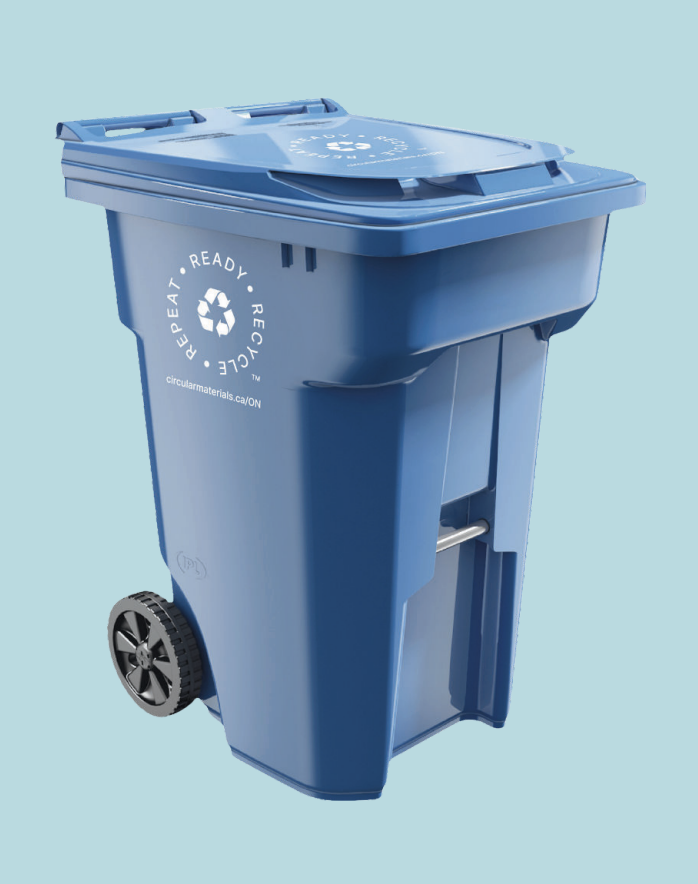
In Georgina, the municipality provided all residents with a recycling cart to manage the increased volume of recyclables.
What changed
Ontario has moved to an Extended Producer Responsibility (EPR) system, meaning the companies that make and sell packaging are responsible for funding and operating the Blue Box program.
In many communities, customer service for Blue Box issues is no longer handled by the municipality. Missed pickups, broken carts, and ‘what goes where?’ questions may be handled by a collection contractor and/or Circular Materials, depending on your area.
What stayed the same
Even with big changes behind the scenes, your everyday routine shouldn’t have changed much.
✔ Same Blue Box/recycling cart, some municipalities have provided upgrades free of charge
✔ Same general collection schedule in most places, but may have shifted to bi-weekly pick-up
✔ The recycling program is still free for residents to participate in
✔ Garbage and organics are still handled separately from Blue Box recycling
What actually happens to your recycling after pickup?
Many people ask, “Is it actually recycled?” The honest answer is: some of it is recycled really well, some of it is recyclable in theory but hard in practice, and some becomes residue (waste) because it’s contaminated or not sortable.
Here’s the simplified journey of the items in your recycling bin:
The most important shift in 2026: recycling isn’t just diversion, it’s data
This is the key idea that doesn’t get explained well enough.
In the past, recycling was mostly about “keeping things out of landfill.” In 2026, it’s also about tracking packaging so the right companies pay for the waste.
Here’s what Extended Producer Responsibility (EPR) means in plain language: Companies that sell packaged products in Ontario are responsible for paying for the Blue Box system.
Under the EPR system, producers report what packaging they supply to Ontario, and fees are calculated by material type. To do that fairly, the system needs good information. When we recycle properly, it helps measure:
What packaging is showing up in homes
What gets sorted and sold (recycled)
What becomes residue (waste)
This matters because some packaging costs more to manage than others. Over time, that pushes companies to use simpler, more recyclable packaging. The data collected supports reporting requirements and performance measurement, and will be used in a report to the Resource Productivity and Recovery Authority (RPRA) to assess progress in mid-2027.
And here’s where your role matters: When recycling is done properly, the system gets better information about what materials are actually showing up in Ontario homes, what is being successfully recovered, and what becomes residue.
“So, is it correct to say: “hard-to-recycle materials → producers pay more → packaging changes?””
Yes, that’s the intended direction. A great example is the one our team discussed in a recent meeting: a toothpaste tube.
A toothpaste tube may not be meaningfully recyclable at scale today, but putting it in the Blue Box helps the system measure the volume and cost of that packaging, and charge the producer accordingly, which creates pressure to redesign packaging to something simpler and more recyclable. And Ontario’s updated regulation reflects the reality that some materials are still very hard to recycle, especially flexible plastics.
Interesting fact: Ontario’s updated regulation phases in flexible plastics recovery targets, starting at 10% in 2026–27, rising to 15% in 2028–31, and 25% in 2032+. That means in the early years, a large portion of flexible plastics will still end up as residue, but the system is designed to measure, improve, and push upstream change over time.
The system needs to measure and manage what producers are putting into the market. That doesn’t mean every single item you put in the bin will magically become a new product tomorrow. But it does mean the system can track what’s being collected, producers can be held accountable for performance, and over time, packaging design can shift toward materials that actually work in real recycling systems.
This is one of the most important mindset changes of 2026: recycling properly helps build the evidence, and the economic pressure that drives better packaging.
Why learning to recycle properly helps everyone
1) It helps the environment
Cleaner recycling streams = better recovery = less landfill waste. Ontario’s landfill capacity is limited, and keeping recoverable material out of landfill matters, especially as the province faces long-term disposal constraints. Additionally, if producers change their products to be more sustainable, that will improve environmental health by reducing overall waste.
2) It can save taxpayer dollars
In the old model, municipalities managed and paid for much of the recycling system. Under Extended Producer Responsibility, the financial responsibility shifts to the companies that produce packaging and paper products. When we put recyclables in the Blue Box instead of the garbage, it reduces the amount of waste municipalities have to collect and landfill, helping save taxpayer dollars. When recyclable materials end up in the garbage, municipalities pay more to transport and dispose of that waste, which increases costs for taxpayers.
3) It supports a more circular society
A circular economy isn’t just “we recycle more.” It means materials stay in use longer, producers design for reuse/recyclability, and systems are measured and improved over time. Better recovery and better accountability create more incentive for recycled content and better packaging design. Recycling properly is one of the simplest ways households can participate in that shift.
4) It improves program performance
When recycling is cleaner and more consistent, more material can actually be sold and processed, so the system performs better, and producers are measured more accurately.
Why some “recycling” doesn’t get recycled and how to prevent it
Recycling works best when the materials are clean, dry, and sortable. Here are the biggest problems that hinder recycling, and what to do instead:
Recycle Right: the habits that make the biggest difference
If you only remember a few things, make it these:
✔ Empty it, prevent contamination
✔ Keep paper and cardboard dry
✔ Don’t bag recyclables (unless your local program specifically tells you to)
✔ When in doubt, look it up (don’t guess)
✔ Follow packaging vs product logic. EPR targets packaging.
A helpful way to think about the new rules: this system is focused mainly on packaging.
If it’s packaging (the wrapper, bag, bottle, box, or tray your item came in), it can often go in the Blue Box as long as it’s empty and clean.
But some “home-use products” that look similar are not packaging. For example, a bread bag is packaging, but a Ziploc bag is something you bought to use at home, so it may not belong in the recycling stream. When in doubt, check your local lookup tool. Some municipalities have drop-off bins to recycle items that are not permitted in the blue box (soft plastics, textiles, batteries, electronics, etc.)
We heard it loud and clear from your messages: people don’t want to look up the recycling rules online every time they throw something away.
We’re including a simple, one-page download for you to print and put on your fridge.
Just keep in mind that you will need to look up whether you are in a single or dual-stream municipality to determine if you need to sort the recyclables into different categories.
A lot of the news coverage has focused on what’s going wrong: missed pickups, confusing customer service, growing pains. And yes, there are bumps in the road during a province-wide transition.
But the truth is, you can absolutely do this, and do it well. Once you learn the new “recycle right” habits, it becomes routine just like any other change.
If you don’t let the headlines sour you, and instead choose to become a recycling champion in your home, you help the system work better right now, and you help push producers toward better packaging over time.
FAQ:
-
Some materials are consistently strong when the stream is clean, including metals and paper especially. Others, particularly certain plastics, are more variable. Under EPR, producers and PROs are judged increasingly on what gets recycled, not just what gets collected.
-
Because the system is being designed to measure and improve over time, and Ontario’s updated regulation phases in flexible plastic targets from 10% (2026–27) up to 25% (2032+).
It’s not perfect, but it shifts the responsibility and cost to producers, which creates pressure to redesign packaging.
-
In many cases, those items are still difficult to recycle at scale today, and some may become residue in the short term. But including them supports measurement, reporting, and producer accountability, so that producers are incentivized to invest in solutions or redesign packaging.
-
No. Empty is the priority. A quick rinse helps when something is messy, but you don’t need to scrub items spotless. The goal is to reduce contamination.
-
This varies by community and collection contractor. Some areas accept extra set-outs, others don’t. If you’re unsure, use your community’s official lookup tool or contact the recycling collector listed for your area.
-
This depends on the program rules and the type of container. Some programs prefer lids on, others prefer certain lids removed. If your community instructions specify “with lids” or “without lids,” follow that guidance and use the printable fridge guide as your go-to reference.
-
Some communities direct missed pickups to the collection contractor, while program questions go to Circular Materials. Many Circular Materials community pages also include a recycling calendar.
Reference Links:
Circular Materials Ontario – https://www.circularmaterials.ca/recycleontario/
RPRA Blue Box Regulation – https://rpra.ca/programs/blue-box/regulation/
Ontario Regulation 391/21 – https://www.ontario.ca/laws/regulation/210391/v9
Environmental Registry of Ontario – https://ero.ontario.ca/notice/025-0009
ChatGPT Deep Research Report: Ontario’s New 2026 Recycling System: What’s Changing and How It Works