Unwrapping the Truth About Holiday Consumerism
It's that time of year again. The bells are ringing, children are singing, and the spirit of consumerism is calling my name.
For the first time this holiday season, I enter Winners and am immediately captivated by the seasonal displays and towers of new products. I have already forgotten that I only came in for socks. My judgement becomes clouded by fluorescent lighting, crowded aisles, and a touch of heat exhaustion - the specific result of wearing my winter coat inside just a little too long. It is a sensory overload nightmare - and yet, I want everything.
As I walk the aisles, I'm fighting an invisible war: my impulsive desire to shop versus my commitment to sustainability. It's not much of a battle; a familiar shame sets in, and even purchasing the socks I came in for feels dirty. The guilt follows me home, and I can't help but wonder: Does it have to be this hard?

The Engine of Excess: Consumerism and Overconsumption
To understand why a simple shopping trip becomes a moral crisis, we need to look at the system we are operating within.
Consumerism is the culture - the societal pressure that convinces us that more stuff equals more success, identity, and status.
Overconsumption is the result - a rate of consumption that exceeds what is necessary or beneficial to us or the planet.
These two go hand-in-hand. Think about the last time you bought something not because you needed it, but because of who you wanted to be. The latest iPhone isn't just technology - it's a status symbol. The 2025 planner you bought promised a more organized and efficient you. That new holiday outfit promises admiration. We aren't just buying objects; we are trying to buy a better version of ourselves.
The Rise of the Marketing Machine
The blurring of our wants and needs isn't accidental; it is engineered. Marketing, media, and society have perfected the art of temptation.
It is estimated that the average person is exposed to anywhere between 4,000 and 10,000 ads daily, depending on where you live and your usual routine. Billboards, influencers, email blasts, TikTok hauls - they all whisper the same message: You could be happier. You could be better. You just need this one more thing.
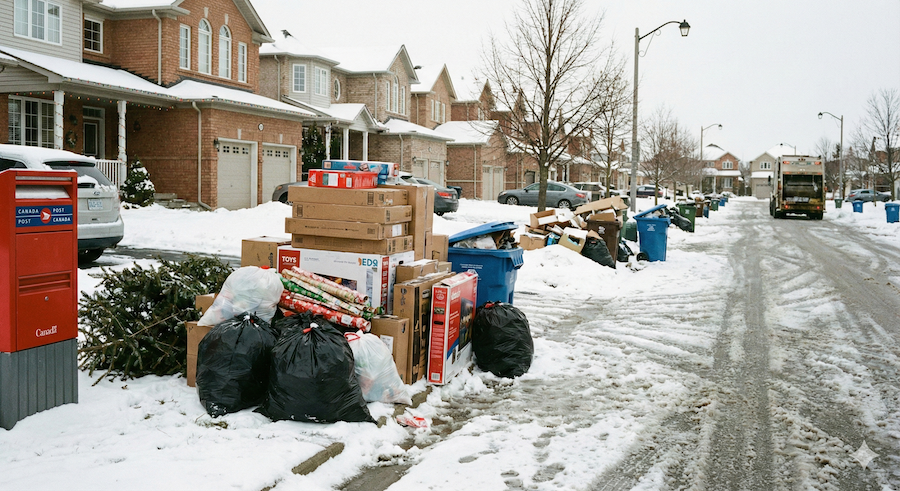
This culture was constructed to ensure growing demand and growing profits for businesses, encouraging consumers to spend beyond their means to achieve a fleeting dopamine hit followed by buyer's remorse. Meanwhile, holiday waste increases by about 25%, primarily from single-use packaging and decorations. It's no wonder so many of us feel caught between the pressure to buy and wanting to do better.
The "Perfectly Sustainable" Trap
For those of us trying to make that shift towards a more sustainable lifestyle, this tension might feel sharper. We know how consumption drives waste, pollution, and exploitation. This knowledge can turn the average shopping trip into an anxiety-inducing event where we feel like there is no winning.
This often leads to an all-or-nothing mindset: if we aren't "perfectly sustainable" and growing our own food, zero-waste, never buying plastic, eco-warriors, we might as well not try at all. This cycle of desire, pressure, and guilt can be paralyzing.
But here is the truth: Consumer culture influences our desires, so it isn't your fault that you are inclined to spend. However, it is in your power to control how you respond.
The Solution: Progress over Perfection
Reducing consumption isn't about deprivation, it’s about being mindful. You don't have to adopt the sad, beige, minimalist millennial, bare-walls aesthetic to be sustainable. We just need to shift our goal from perfection to progress. We are aiming for a society that functions within the limits of our environment: not through a few perfect people, but through millions of people making imperfect yet thoughtful choices.

5 Ways to Shop Mindfully This Season
If you are feeling the pressure, here are practical ways to navigate the holidays without the waste and guilt:
Make a List and Honour It: Walking into a store without a plan makes it easy to buy more than what's necessary. Write down what you need (e.g., just the socks) and stick to the script.
The 24-Hour Rule: Pause before purchasing. If it is not essential, wait at least 24 hours. If it is still an enthusiastic "yes" tomorrow, proceed. Usually, the impulse fades.
Choose Experiences Over Things: Memories last longer than materials. Consider gifting concert tickets, classes, or a dinner out rather than physical objects.
Sustainable Options When Possible: When you do need to buy, look for local, ethical, or second-hand options.
Let Go of the Guilt: This is the most important step. Progress - not perfection - is the path forward.
Other Underconsumption Tips for the Holidays
The "Secret Santa" Strategy. If you have a large family or friend group, buying for everyone can really drive overconsumption (and financial stress). Suggest a Secret Santa or "Name Draw" where everyone buys one thoughtful, higher-quality gift rather than multiple cheap, obligatory ones. It drastically cuts down on the volume of "stuff" entering the ecosystem.
Repurposed Wrapping FTW. Most wrapping paper is non-recyclable due to glitter, foil, or plastic coatings. Instead, try newspaper, repurposed fabrics, old maps, sheet music, or last year's wrapping paper if you saved it.
Proud Outfit Repeating. The pressure to have a new outfit for every holiday party is a marketing ploy by the fast fashion industry. My favourite saying is "act confident and no one will question you". If you're really craving a new look, host a clothing swap this season or shop in your friends' closets to freshen up your wardrobe.
Specific Wishlists. Being bold enough to be specific saves us from receiving things that aren't useful or needed. Vague answers like "I don't need anything" usually result in generic gifts that eventually end up in the landfill.
Rent or Borrow for Hosting. If you're having company this season, don't buy new! Ask guests to bring a dish in their own serving ware. Borrow extra chairs from neighbours. Sharing with our communities is key to underconsumption.
The Bottom Line
At the end of the day, the holidays don't require overflowing baskets to be meaningful. Consuming less isn't about totally rejecting the season's magic; it is about making room for what truly matters.
And yes, if you buy the socks, you’re still doing just fine.
Happy Holidays from the AGF Team!