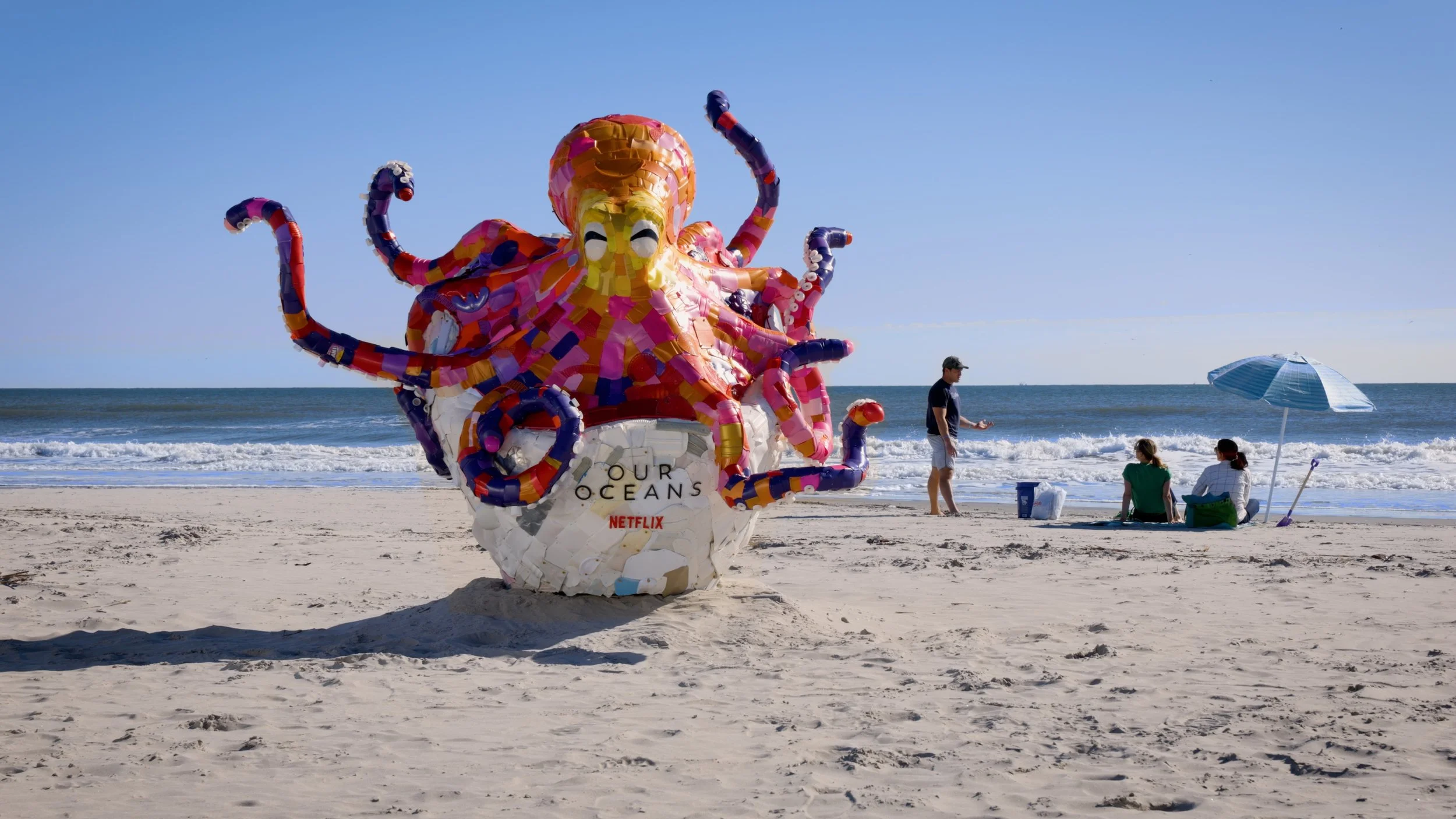
Coco is a colourful litter art octopus created by TerraCycle for the release of Netflix’s Our Oceans. More than 2,000 pieces of recovered beach and waterway plastic cover the sculpture, including plastic that A Greener Future contributed from our cleanups.
For our community, that connection makes Coco especially meaningful. Material collected while caring for our local environment became part of an artwork with a much wider story to tell.
From our cleanups to a collaborative artwork
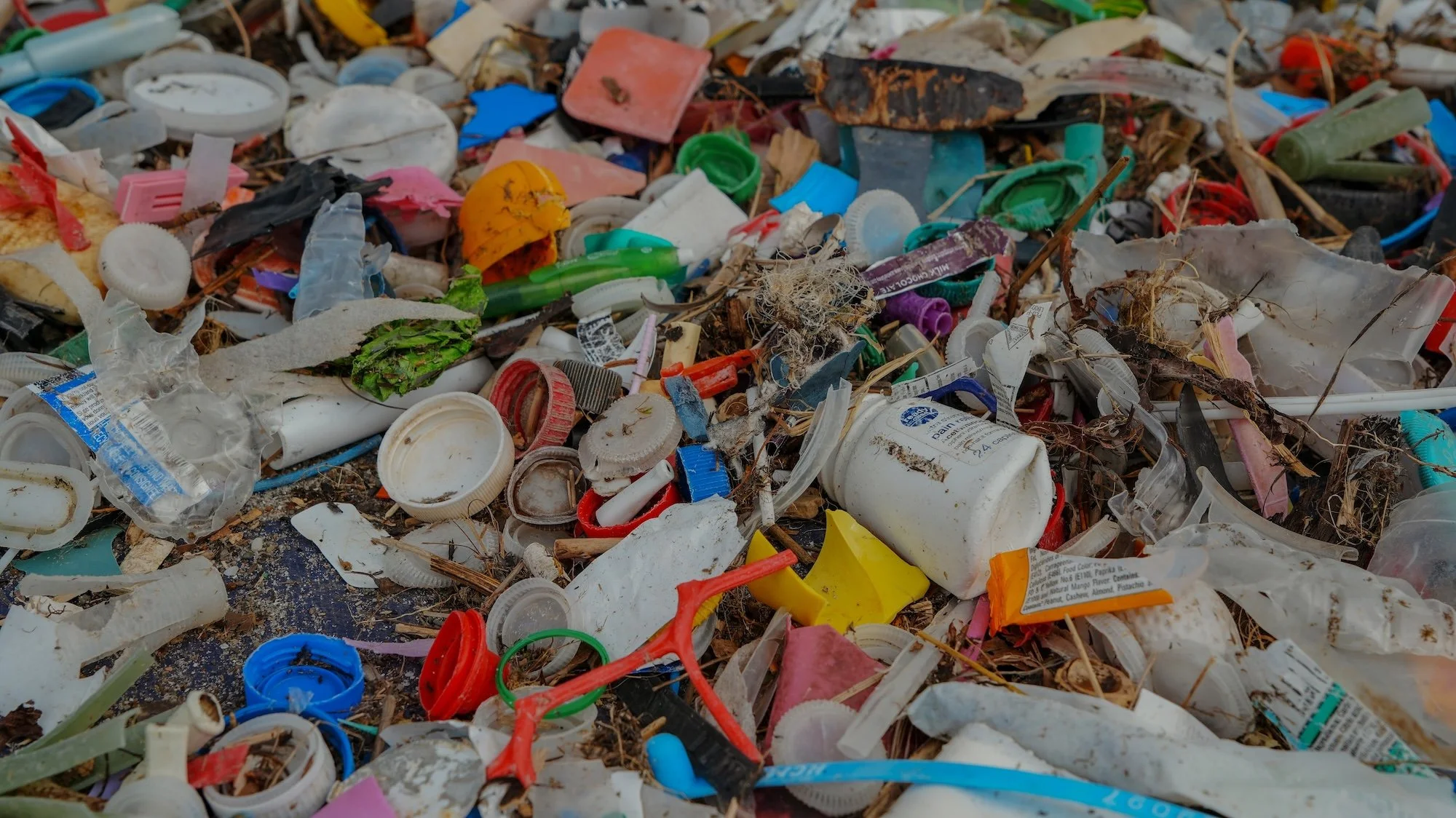
At A Greener Future, a cleanup begins with paying attention to what doesn’t belong. We pick it up because we care about the places around us and the wildlife that share them.
For this project, we sent some of the plastic collected at our cleanups to TerraCycle to be incorporated into Coco. Our role was to contribute recovered material, and TerraCycle’s design team brought the sculpture to life.
A Greener Future, alongside TerraCycle Foundation, Love Blue Inc., 5 Minute Foundation and Clean Ocean Action, contributed the collected plastic. It’s a lovely reminder that a finished artwork can hold the efforts of many different communities.
The plastic behind Coco
Across the project’s contributors, 347 pounds of plastic, about 157 kilograms, were collected for Coco. The materials came from the Indian Ocean, Atlantic Ocean and the Great Lakes.
In the finished piece, pink, orange, yellow and purple plastic form a bright patchwork. Curving arms reach out in different directions, lined with small bottle caps that resemble suckers. The discarded objects are still recognizable, even as they become something new.
That is part of what makes litter art so compelling to us. You can enjoy the colour and character of the sculpture, then pause to consider the materials that made it possible. Coco was created by TerraCycle’s industrial design team led by Tiffany Threadgould, you can learn more about her design process through the video below. We’re proud that AGF’s contribution of recovered plastic could support their work.
The connection to Our Oceans
Netflix’s five-part documentary series Our Oceans, narrated by Barack Obama, premiered on November 20, 2024. Its Indian Ocean episode features a veined octopus using discarded objects as hiding places and propelling pebbles at fish.
The Coco sculpture connects to that remarkable animal. For us, there is something both fascinating and unsettling about the connection: an adaptable ocean creature, represented in the very material that doesn’t belong in its habitat.
Why we are sharing Coco in our gallery
Our Litter Art Gallery explores waste, pollution and our relationship with the environment. Coco belongs in that conversation, and our small part in its creation gives us another reason to share it.
Turning recovered plastic into art doesn’t replace the need to prevent waste. It gives us another way to notice it, talk about it and think about what we can change.
We hope Coco encourages you to look closely, both at the artwork and at the places you care about. If you’d like to take that next step with us, explore upcoming AGF volunteer events. A little time spent caring for a shoreline is a meaningful place to begin.
References
Our Oceans Coco promotional video — material count, collection weight, source waters, inspiration and contributor credits.
New Jersey Motion Picture & Television Commission 2024 Annual Report, page 31.
Tiffany Threadgould’s professional profile, Teen Arts NJ.
Our Oceans episode guide, Netflix Tudum, November 20, 2024.