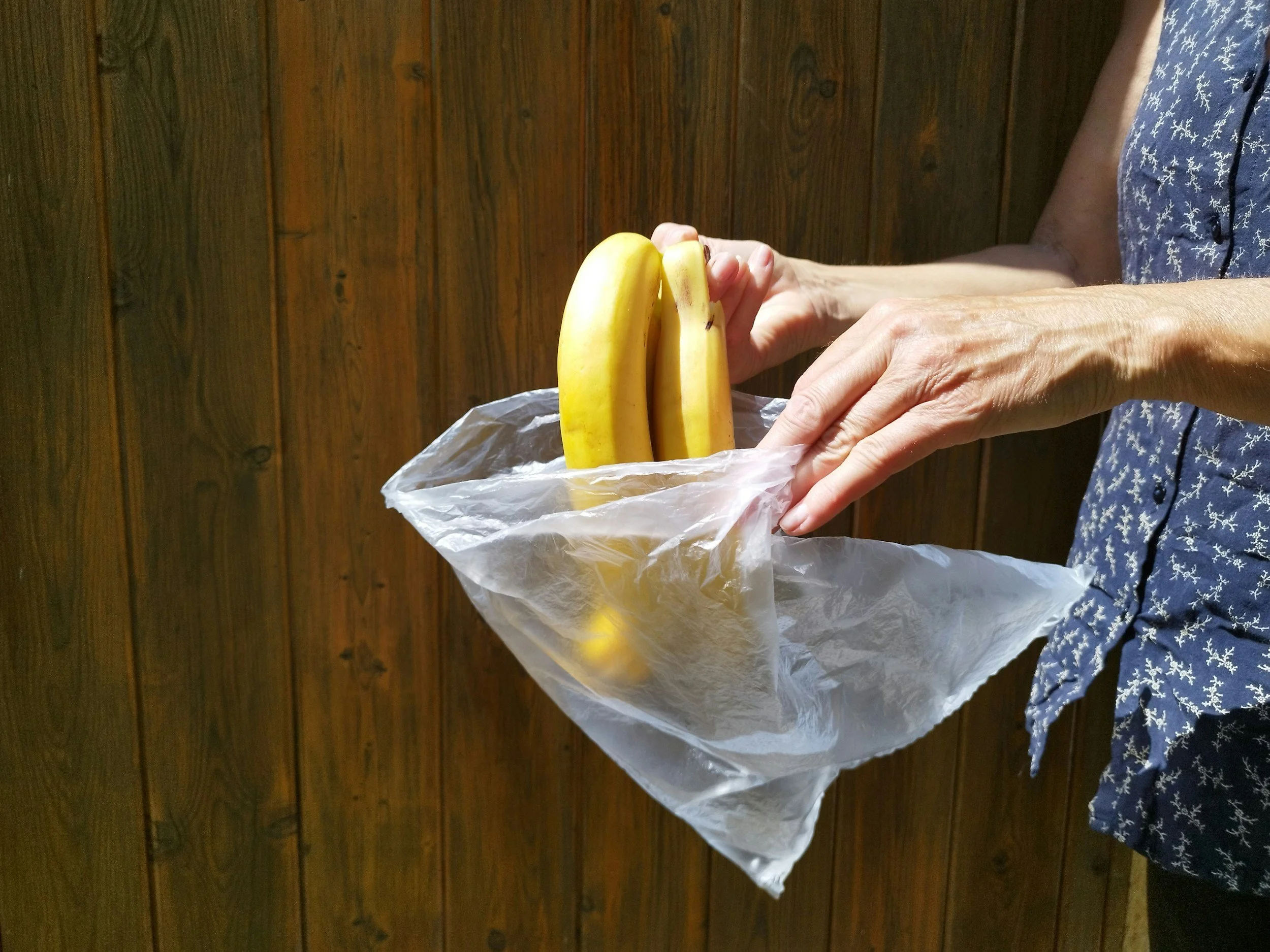
Reach for a bunch of bananas, and there’s often a roll of plastic bags right beside it. It’s easy to tear one off without thinking. But the bananas already have peels, and the bunch comes with its own handle. What would you do if the roll weren’t there?
At A Greener Future, our volunteers pick up food packaging along Lake Ontario’s shorelines. Picking it up matters. So does figuring out how to use less of it in the first place. That’s why we’re sharing Garbage-less Groceries, a U of T Trash Team project that tested whether a few changes in the produce aisle could help shoppers take fewer single-use plastic bags.
How many produce bags does one grocery store use?
In summer 2024, researchers led by Diego Arreola Fernández and Dr. Chelsea Rochman visited 30 Toronto grocery stores across 11 chains. They observed how shoppers used produce bags, counted dispensers and noted where stores put them. The team estimated that a Toronto grocery store uses about 2,000 single-use produce bags a day.
One finding helps explain the banana example: about 61% of dispensers were beside produce that already had packaging or a natural peel. And shoppers were open to alternatives. Of the 50 Longo’s customers the team surveyed, 94% said they were open to using reusable produce bags and 72% said they would be willing to buy them.
What happened when two stores changed the setup?
At Longo’s Liberty Village and York Mills locations, the researchers tested changes in stages. First came posters in the produce section. Then the team placed smaller signs beside the bag dispensers and made reusable bags easier to spot. The York Mills store also removed some dispensers. In the final stage, shoppers were offered free reusable produce bags.
In the final stage, shoppers used 30% fewer single-use produce bags per person, on average, than before the changes. That includes people who took no bags at all. Among shoppers who took at least one, the average number they took was 39% lower. Sales of reusable bag packs also rose at both stores.
This was a two-store pilot. Because the changes built on one another, it's difficult to say how much difference any single poster, dispenser or giveaway made. But it gives grocers something practical to test: instead of asking every shopper to remember to use less plastic, take a look at what the aisle invites them to do.
The team also looked beyond the produce section. In a review of store-brand packaging at 11 stores, they found categories like pasta, rice and oats where alternatives to single-use plastic packaging were already on the shelves. That’s a decision a retailer can make before a shopper even walks in.
Try it on your next grocery trip
Start with one item you’re comfortable leaving loose. Put the bananas straight in your cart, or skip the extra bag around a carton of berries. If a bag is useful for keeping a dozen loose apples together, tuck a clean reusable produce bag you already own inside your shopping tote. No new purchase needed.
Want to take it a step further? Notice where your store puts its bag dispensers. If there’s one beside already-packaged produce, that’s a specific, friendly question for the manager: Would you be open to trying this spot without a dispenser?
Bring the research to your community
See the findings, compare the two stores’ results and explore the team’s recommendations. This four-page brief is a useful starting point for a conversation with a grocer or local decision-maker.
Ready to test an idea with a local store? This two-page guide walks volunteers and community groups through finding a grocery partner, trying a change and comparing bag use before and after. It also links to outreach templates, so you don’t have to write that first email from scratch.
Garbage-less Groceries was led by the U of T Trash Team in collaboration with Longo’s, with support from Community Matters Toronto. The DIY guide was supported by The 5 Gyres Institute’s Ambassador Action Fund.