Why Keeping Litter Out of Lake Ontario and Our Waterways Matters
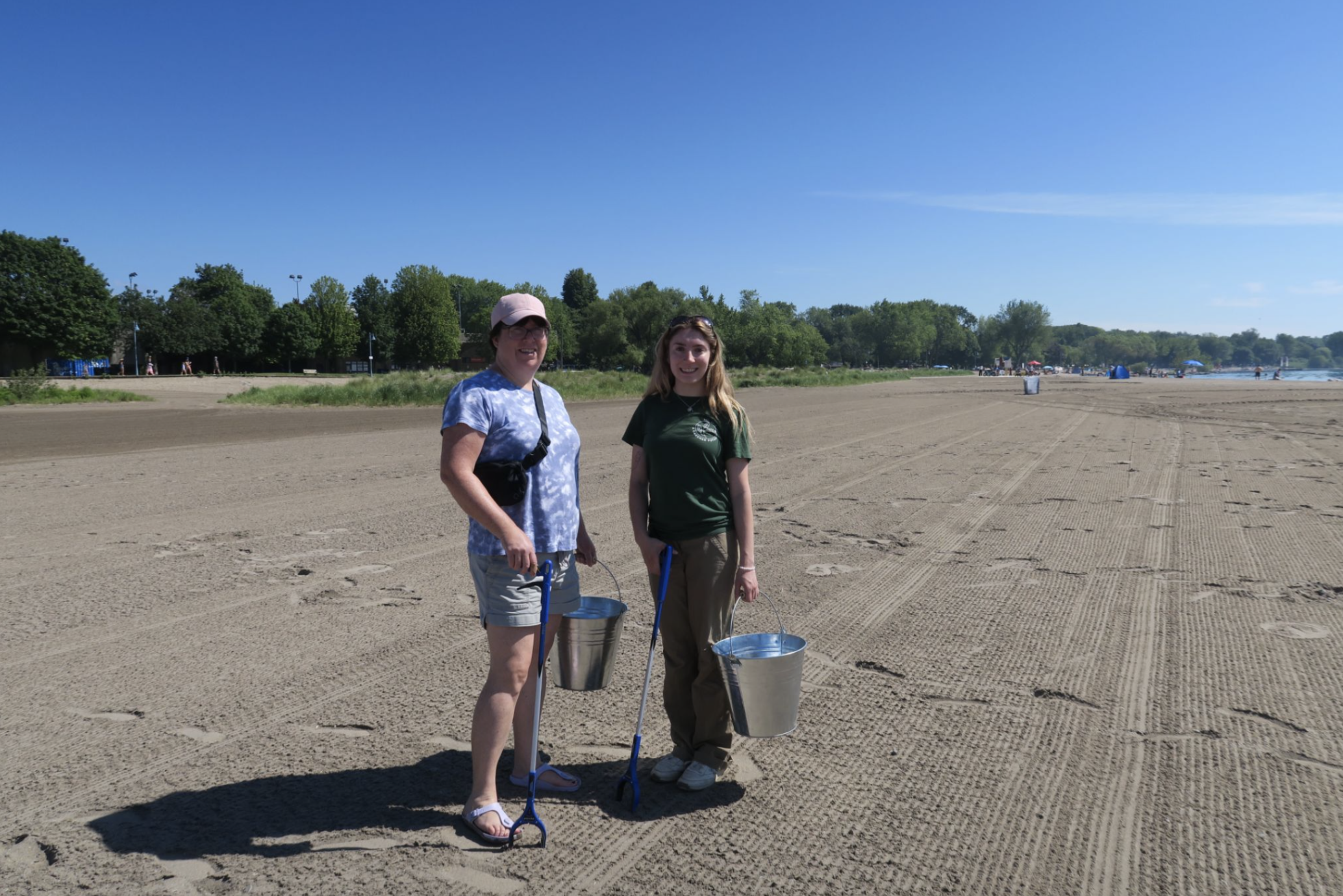
A Greener Future staff and volunteer cleaning up Woodbine Beach on June 27th, 2026
With our seasonal litter cleanups, we focus on protecting our lakes from pollution, but how does litter affect our waterways, and why is keeping it out of the environment so important?
If you haven’t heard, we Love Our Lakes! Each year, volunteers join A Greener Future’s Love Your Lakes program to remove hundreds of thousands of pieces of litter from communities and shorelines, especially around Lake Ontario.
This year alone, we’ve collected more than 500,000 pieces. As A Greener Future celebrates surpassing 10 million pieces of litter collected since 2014, it is worth asking: What does that number really mean?
Reaching 10 million pieces is an incredible milestone, but its meaning goes far beyond the number. Every cigarette butt, nurdle, food wrapper and piece of foam removed is one less piece that can enter a storm drain, break down into microplastics or harm wildlife.
Lake Ontario is the last of the Great Lakes before water flows through the St. Lawrence River and eventually reaches the Atlantic Ocean. This makes it an important checkpoint for litter travelling downstream. The United Nations Environment Programme estimates that between 19 and 23 million tonnes of plastic waste enter aquatic ecosystems worldwide every year.
That statistic can feel overwhelming. But when we see volunteers joining community cleanups to make a positive environmental impact, we feel hopeful about the future. As we celebrate 10 million pieces of litter collected, we are also celebrating cleaner water, healthier ecosystems and a growing community of environmental stewards.
Environmental Impacts
Water Contamination
Let’s look at one of the most common items collected during our cleanups: the cigarette butt.

Cigarette butts collected during Toronto Climate Week at Woodbine Beach on June 1st, 2026
A person may smoke a cigarette for only five or ten minutes, but after it is discarded, the butt can be washed into a storm drain and eventually reach a lake or river. Cigarette butts can leach nicotine, metals and other toxic chemicals into water, and cigarette-butt leachate has been shown to harm aquatic organisms.
Research suggests that one discarded cigarette butt can potentially release enough nicotine to contaminate up to 1,000 litres of water above a predicted no-effect concentration. This does not mean that every butt makes exactly 1,000 litres of water undrinkable, but it illustrates how much pollution can come from something so small.
To date, A Greener Future volunteers have collected 7,519,650 cigarette butts through the Unsmoke Canada Butt Blitz and Love Your Lakes programs. Using the potential 1,000-litre figure, that represents more than 7.5 billion litres of water, the equivalent of approximately 3,008 Olympic-sized swimming pools.
Cigarette butts are not the only source of contamination. Plastic bags, cans, bottles and other litter can also break down into smaller pieces, releasing or carrying chemicals into the surrounding environment.
Nurdles, small plastic pellets used to manufacture plastic products, can also attract pollutants to their surfaces and carry them through aquatic environments. Because they resemble fish eggs, they may be mistaken for food by fish and other wildlife. To date, our volunteers have collected 400,000 nurdles through A Greener Future cleanup events, removing them from shorelines before they could travel farther through our waterways.
With the Great Lakes providing drinking water to millions of people, keeping litter out of our waterways is essential for healthy communities and ecosystems.
Effects on Wildlife
Aquatic wildlife can be especially vulnerable to pollution. Fish, turtles, birds and other animals may mistake plastic debris for food. When ingested, litter can cause blockages, injury, reduced feeding and, in severe cases, death. A recent study notes that chronic exposure to even low levels of pollutants can lead to suppressed immune systems, reproductive problems, and developmental abnormalities in aquatic species. Plastic pollution also breaks down into increasingly smaller pieces called microplastics. These particles can be consumed by organisms at the bottom of the food web and move through aquatic ecosystems.
Each piece of litter removed during a community cleanup helps interrupt this chain of consequences before that litter can travel through our waterways or enter a food web.
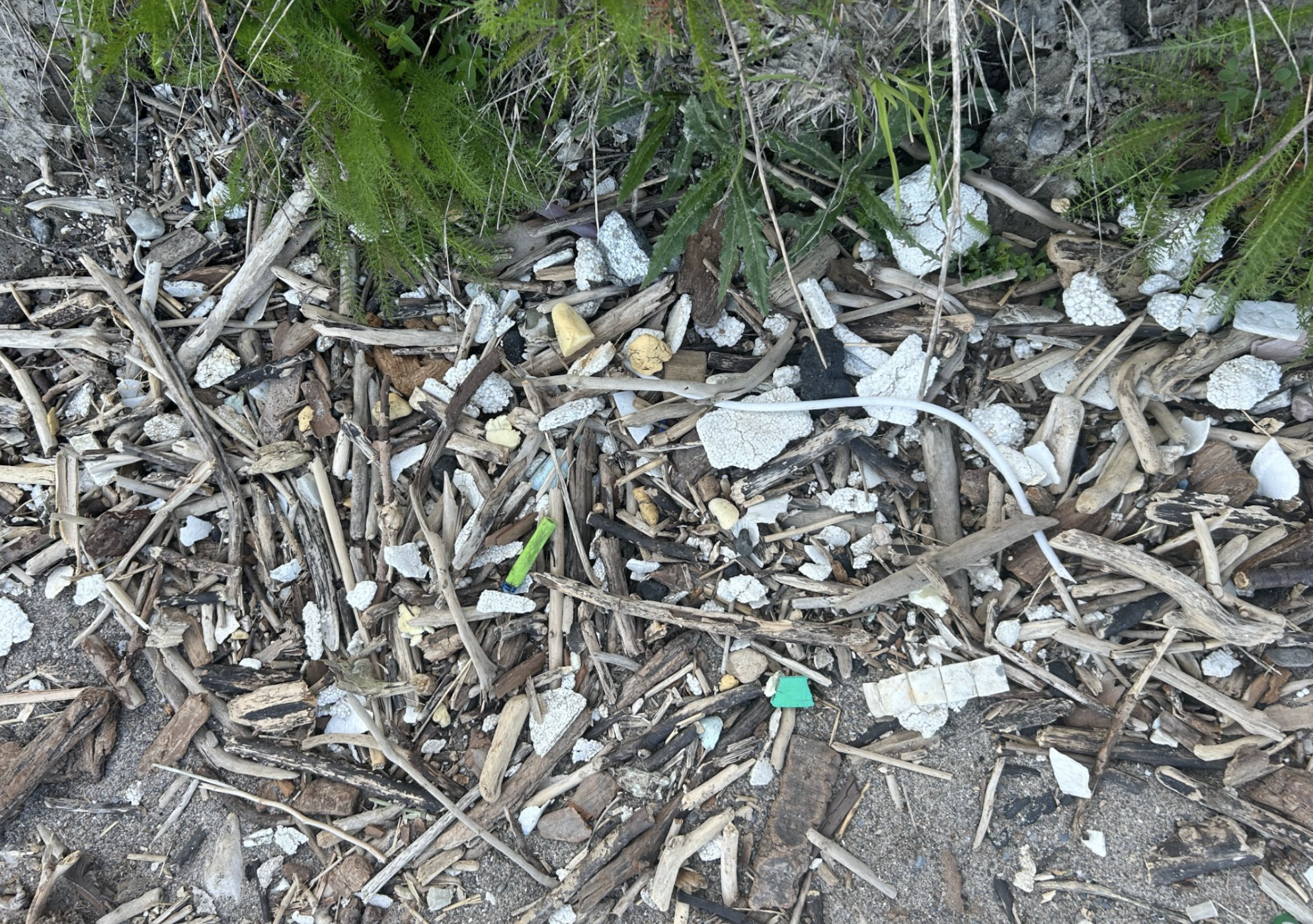
Foam found washed up on East Point Park Beach
Aquatic Plant Life
Aquatic plants are essential to healthy freshwater ecosystems. They produce oxygen, provide food and shelter for wildlife, stabilize shorelines and create important habitat for fish, birds and invertebrates.
Microplastics have been found on and within some aquatic plants and algae, raising questions about how plastic pollution may affect their growth and how particles can move through food webs when these plants are eaten.
Protecting aquatic plants and coastal wetlands helps strengthen the entire Lake Ontario ecosystem, from the smallest organisms to the wildlife and communities that depend on it.
Making a Difference
Sometimes environmental progress begins with one simple action: choosing to pick up a piece of litter from the sidewalk before it reaches a storm drain. Each piece collected creates a ripple effect of positive outcomes for an entire ecosystem. Looking back at all the pieces of litter our volunteers have kept from ending up in our lake, which are leading us to our 10 millionth piece, we feel so grateful to our community.
Lakes, along with the rivers that feed them, provide 90 percent of the world’s surface fresh water and support the livelihoods of an estimated 60 million people. Protecting these waters is both a local responsibility and part of something much larger.
Ten million pieces is worth celebrating, but it is not the finish line. By continuing to reduce waste, prevent litter and participate in community cleanups, we can help protect Lake Ontario and our waterways for generations to come.